
Transforming Sierra Leone's Agriculture with AI-Driven Soil Intelligence
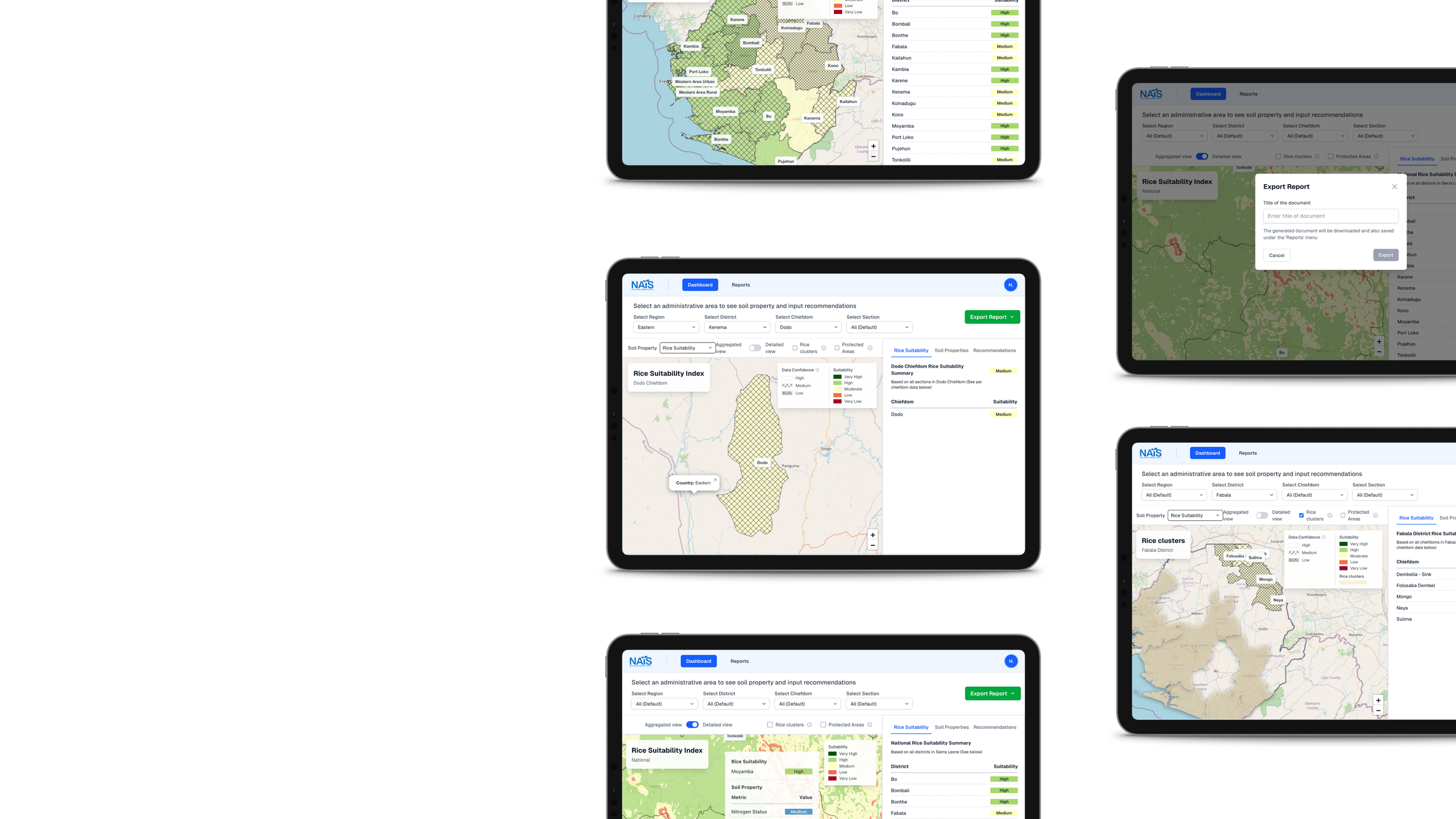
A digital tool that enables the government to plan for the crop calendar by providing AI-driven insights into soil health, fertilizer needs, and rice suitability.
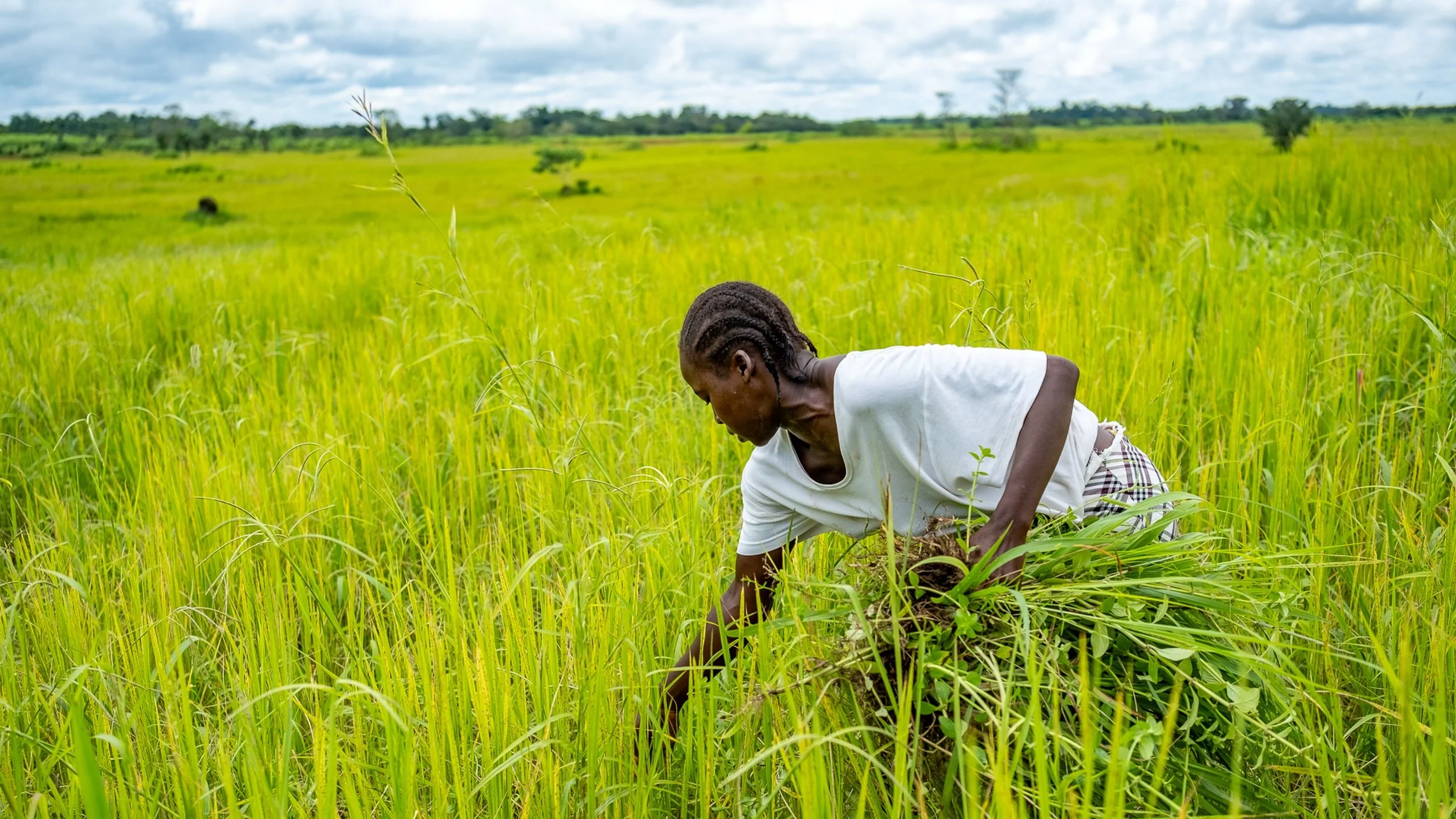
Sierra Leone’s economy and food security depend on agriculture, yet climate volatility, limited infrastructure, and fragmented data continue to constrain productivity. The Government engaged the Tony Blair Institute and a technology partner to explore how AI-driven tools could support the delivery of its flagship Feed Salone programme, improving planning, resilience, and resource allocation.
The Challenge
Led the end-to-end UX from discovery to delivery.
My Role
TBI: 1x UX Designer, 1x Architect 1x Product manager, 1x Agriculture Specialist, 1 x Delivery Manager
Team
8 Week Discovery
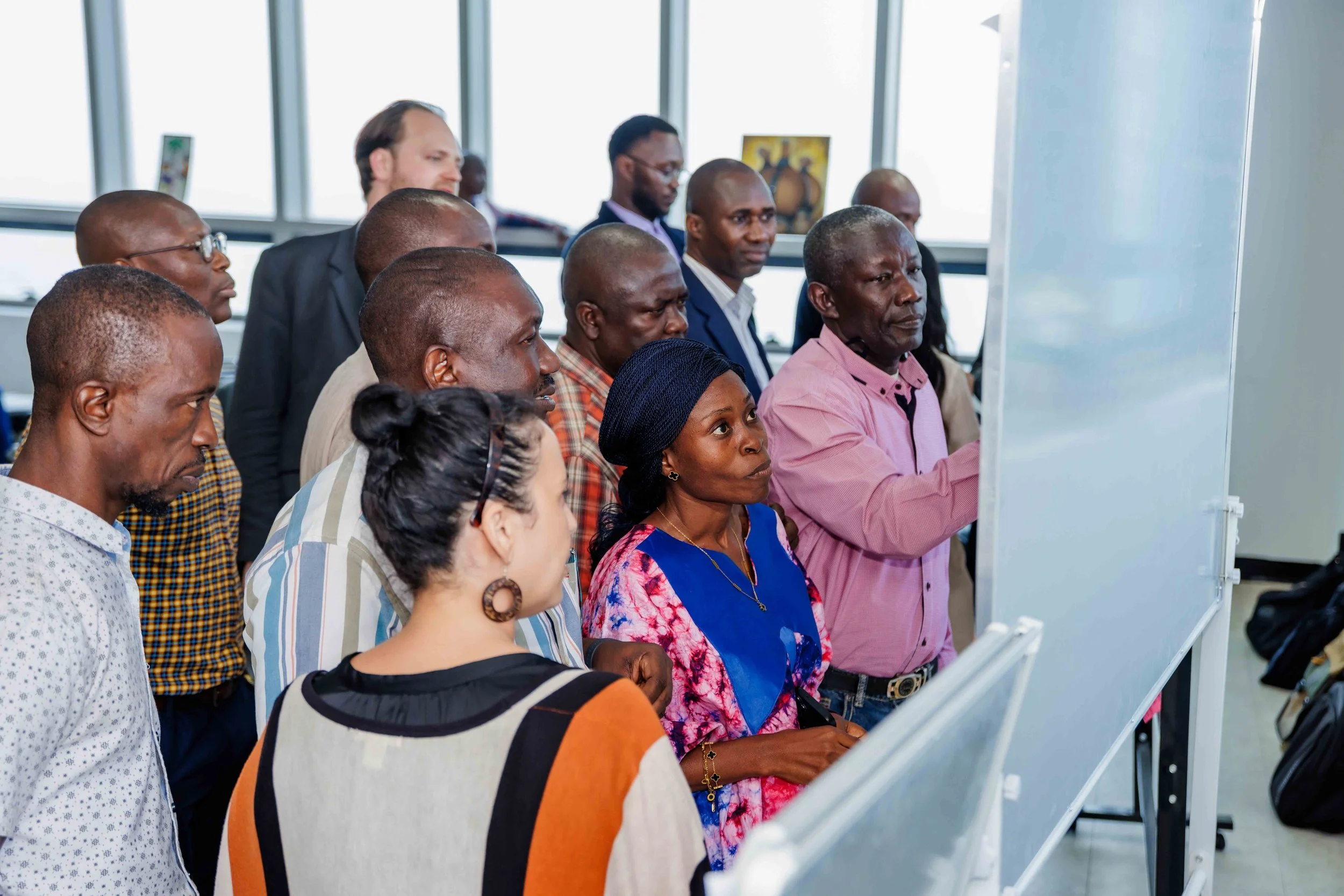
We began conducting thorough research to understand the specific challenges, goals, and daily tasks of Sierra Leone's agriculture team and to understand their flagship ‘Feed Salone’ program. We spoke with private-sector agri-tech businesses, civil servants, and extension workers.

1-2-1 Interviews
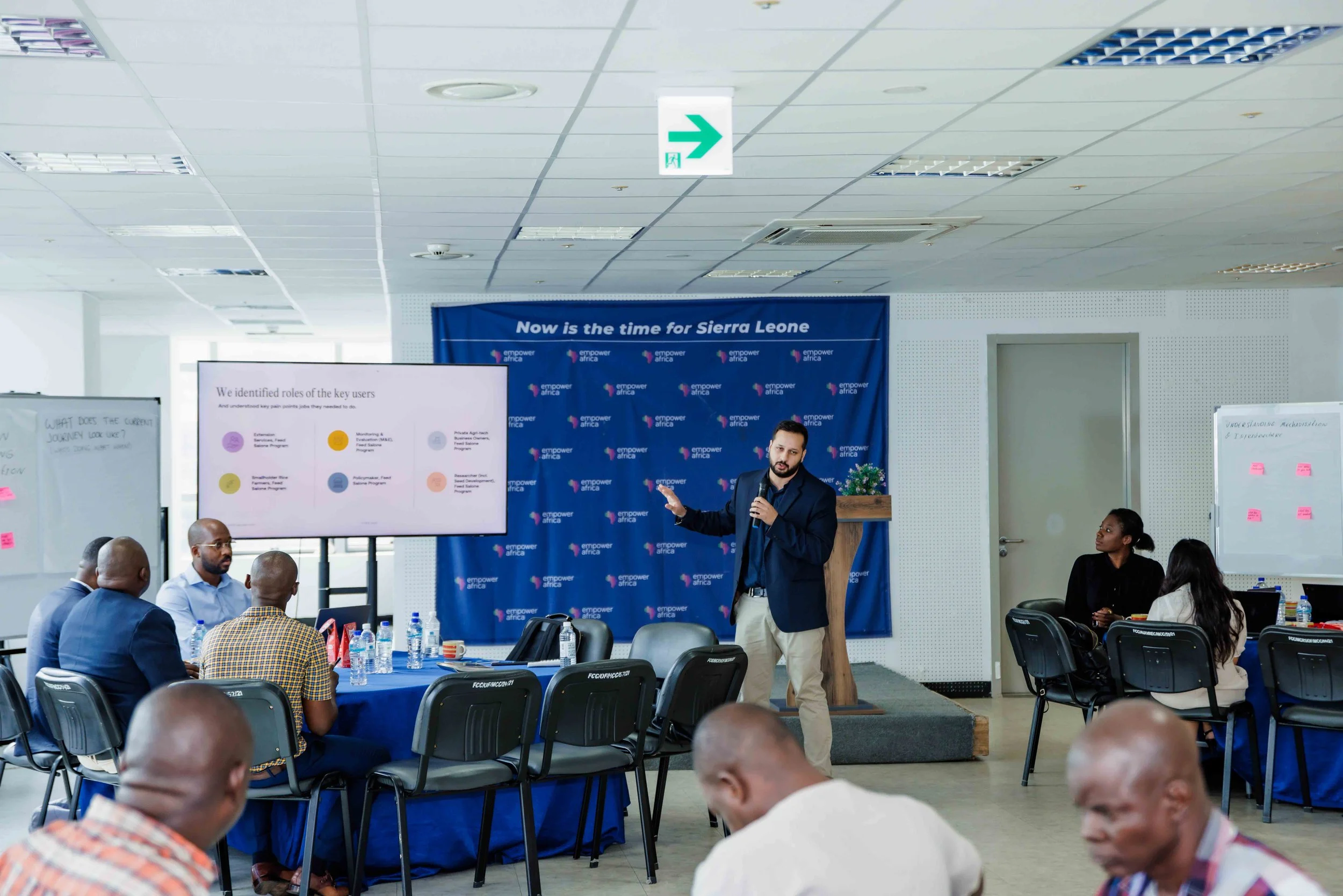
Through in-depth interviews with key ministry officials, we identified the specific challenges and responsibilities of stakeholders in the Feed Salone programme.

After the interviews. We used workshops to interrogate the key problems we’d found in discovery.
Workshops
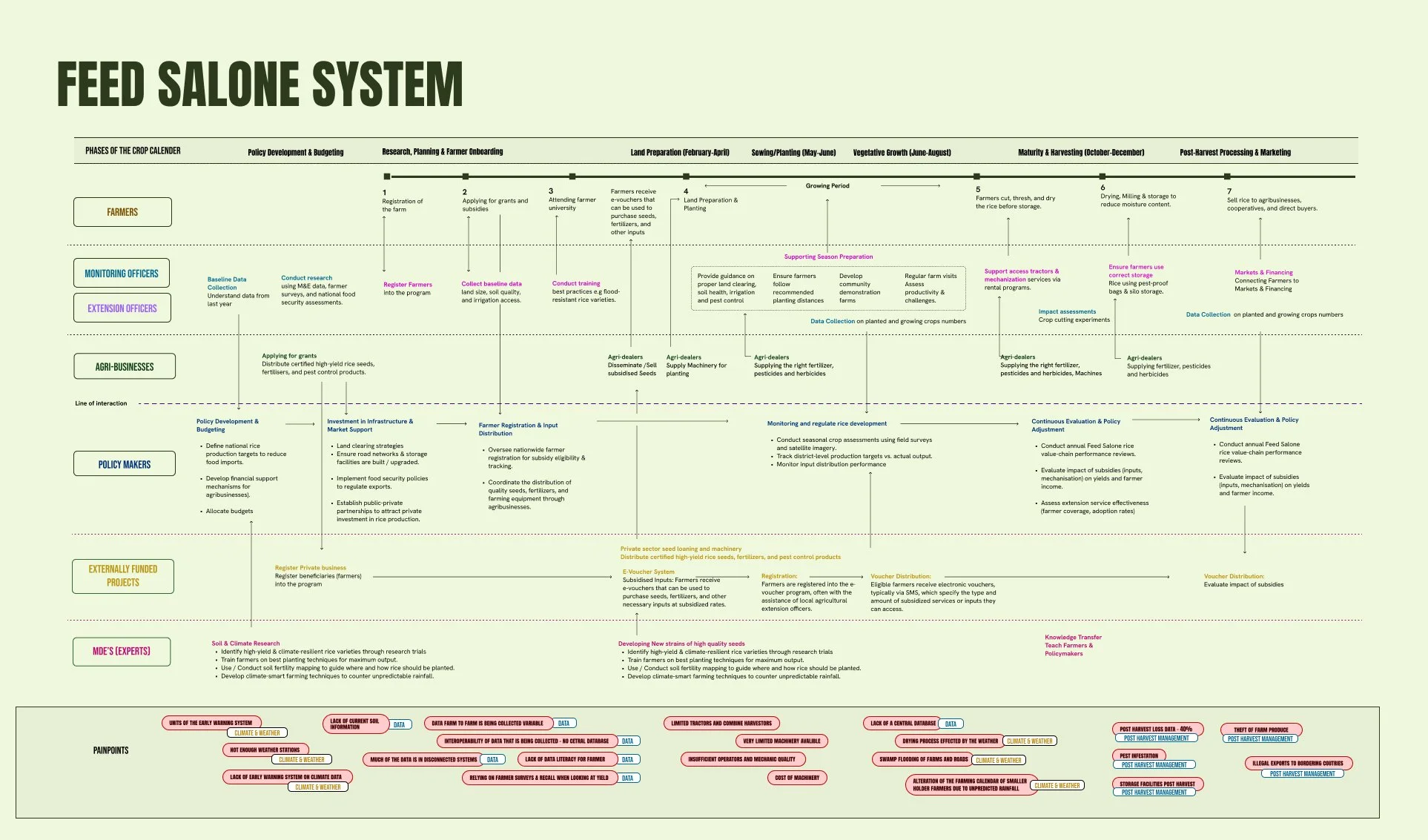
We clearly documented how the feed salone system operates today—who is involved, what happens at each step.
Current-State Mapping
Key Learnings and synthesis
Three things became clear early in discovery. First, the absence of updated soil data wasn't just a technical gap — it was causing real harm, with over-application of fertiliser damaging land and under-application leaving yield potential unrealised. Second, the people responsible for fixing this weren't talking to each other. Information sat in silos across departments, and decisions were being made in isolation. Third, and most importantly, the system had calcified — people were repeating the same processes and hoping for different outcomes. The design challenge wasn't just to build a better data tool. It was to give people a genuine reason to work differently.
Problem Statements & Usecases

Inaccurate Yield Estimation at Scale
Current yield estimates are often inaccurate due to misreporting and limited verification mechanisms.
Opportunity
How might we design a data collection and verification that improves the accuracy, transparency, and usability of yield estimates for decision-makers?

Poor road infrastructure and fragmented coordination systems hinder the efficient distribution of machinery. As a result, equipment arrives late or not at all.
Limited Access to Mechanization
Opportunity
How might we improve visibility, coordination, and planning around machinery access so that farmers receive the right equipment at the right time?

Missing and Outdated Soil & Field Data
Ministry officials and planners rely on soil health and field data to forecast fertilizer demand and attract investment. This data is often outdated, incomplete, or difficult to access.
Opportunity
How might we create a system that makes soil and field data easier to collect, update, and interpret for both policymakers and investors?
Design Development & Testing
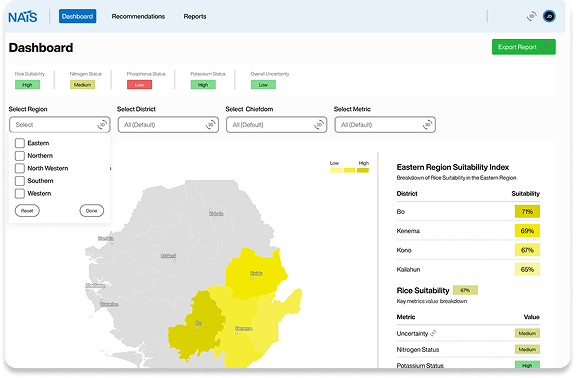
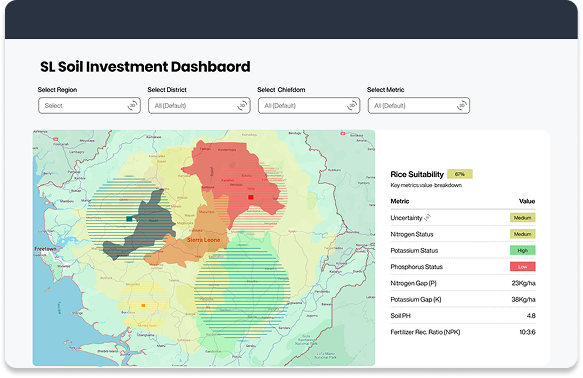
Working in biweekly sprints, we developed and tested prototypes of varying fidelity to remotely engage stakeholders in Sierra Leone. Through iterative testing, we validated key hypotheses around user needs, workflows, and data comprehension. These sessions helped ensure that core features—such as map-based soil insights, confidence indicators, and report generation—were intuitive, relevant, and actionable for end users.
National Agricultural Intelligence System
The National Agricultural Intelligence System (NAIS) is a digital tool that enables the government to plan for the crop calendar by providing AI-driven insights into soil health, fertilizer needs, and rice suitability.
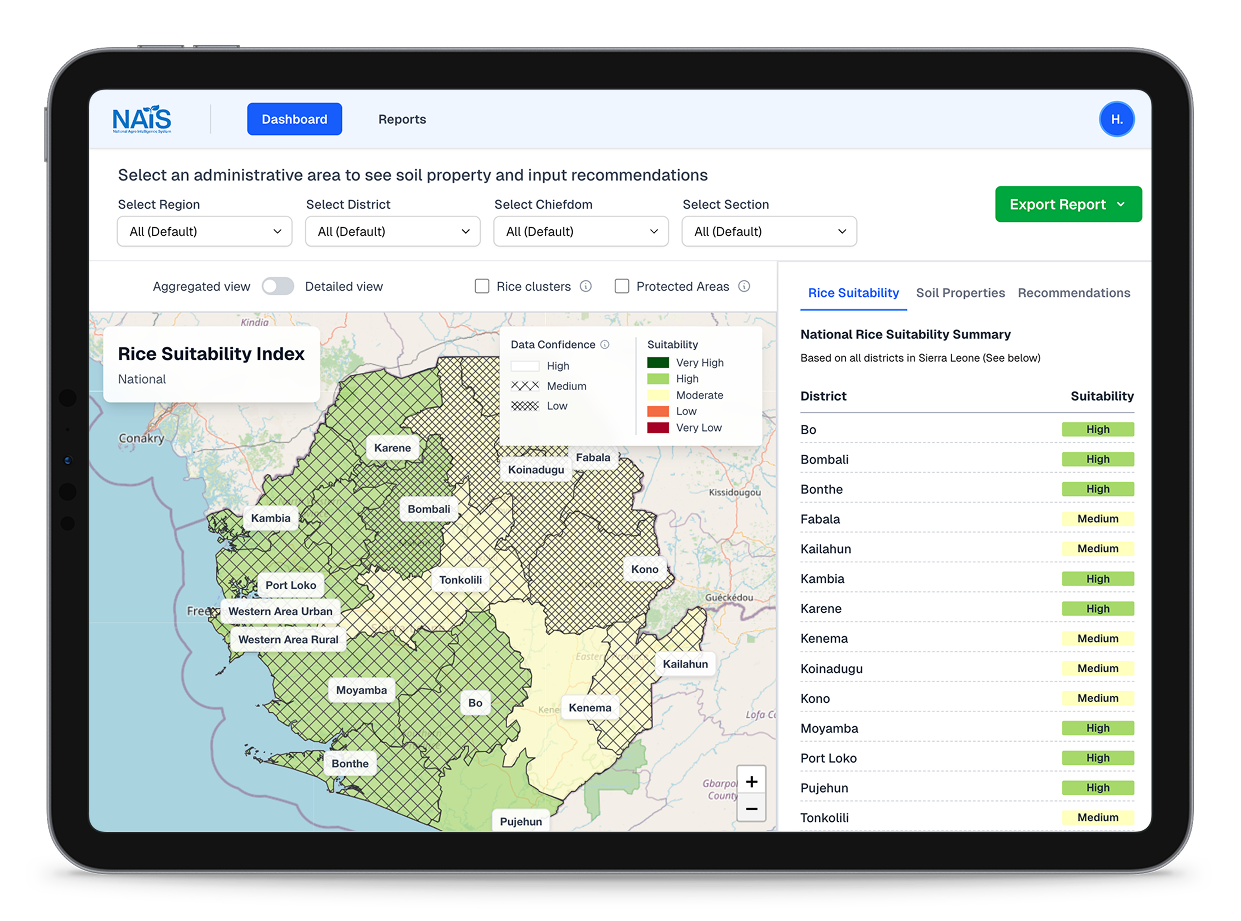
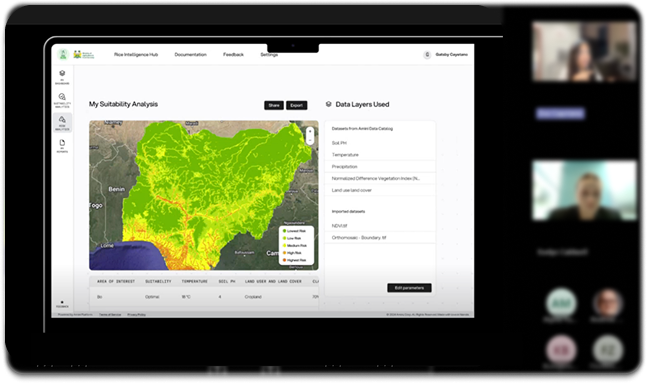
A Platform that utilises Sentinel-2 data and Machine learning to give soil insights
A Map Navigation allows users to explore soil data at multiple geographic levels. Allowing them to explore soil suitable for rice, its properties, and input recommendations
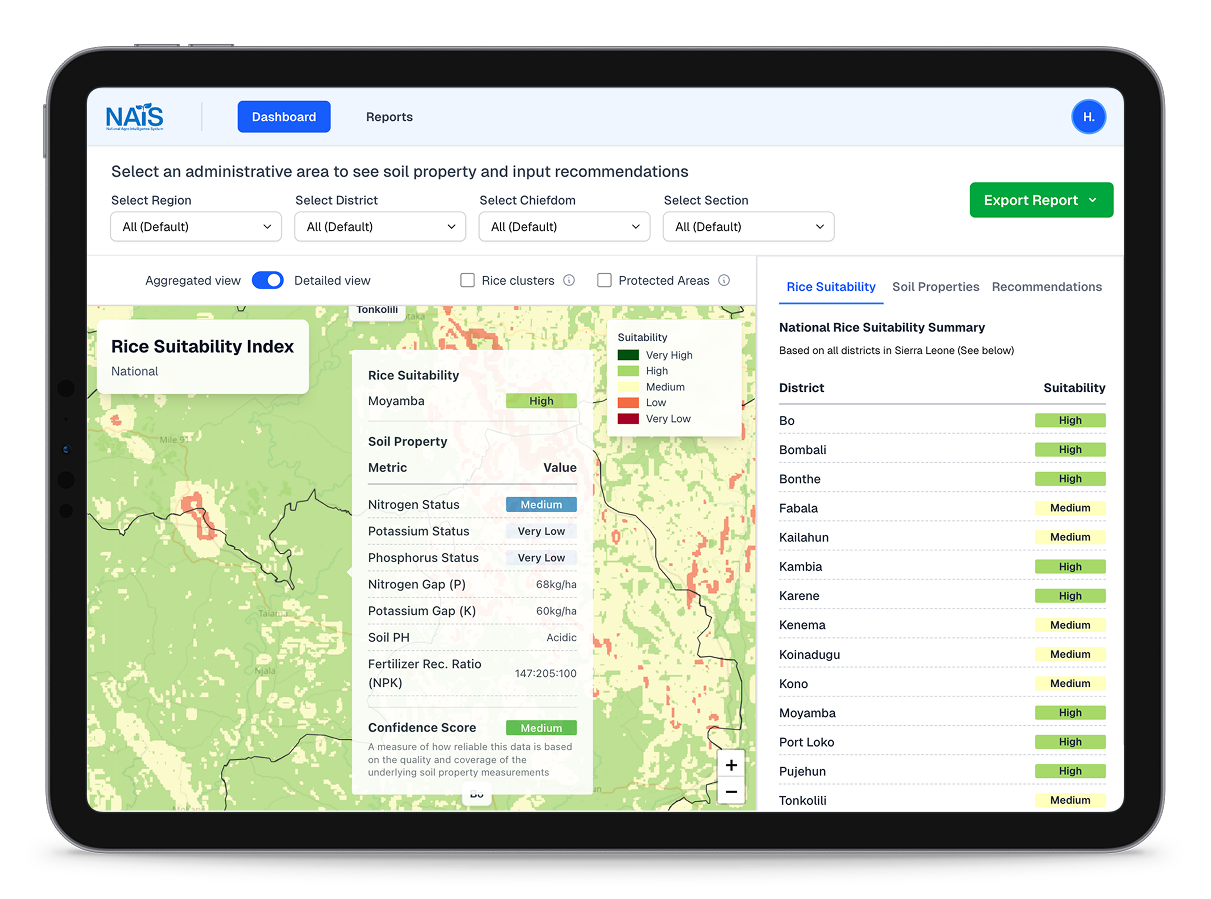
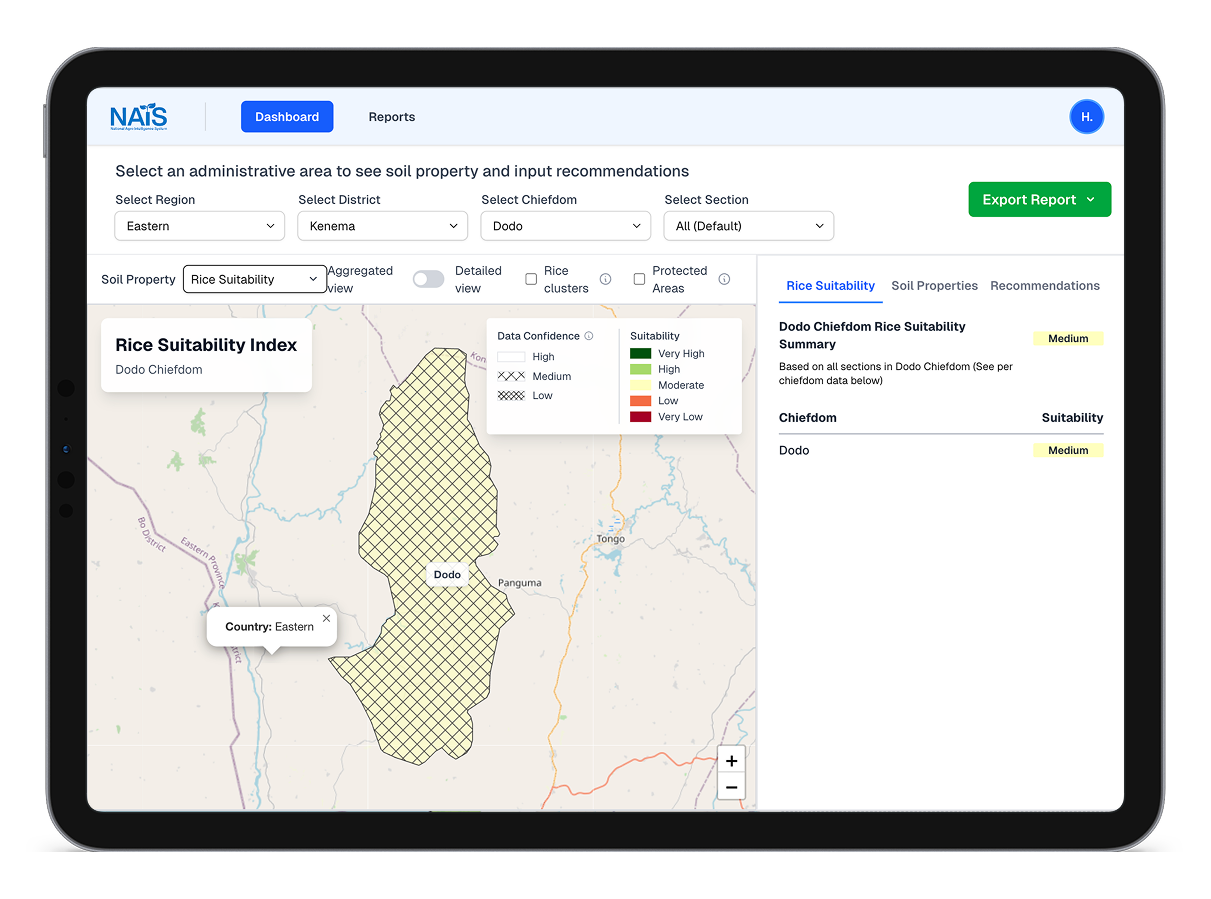
From National Maps to Chiefdom-Level Insights
Users can select different soil and crop layers to tailor insights to specific administrative areas. Combining AI-driven soil intelligence with flexible regional views.
Turning Soil Data into Clear, Actionable Insights
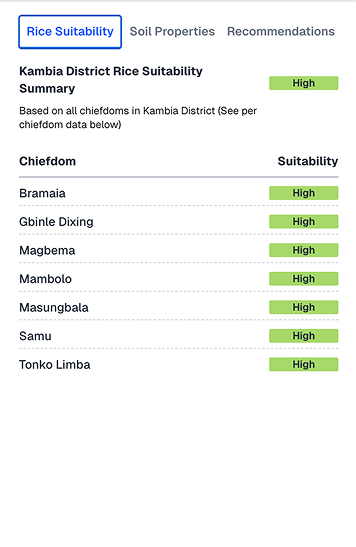
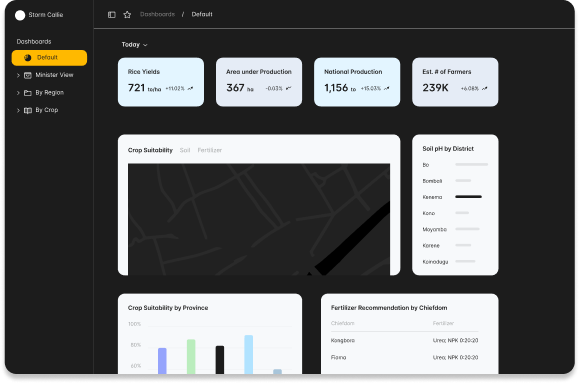
Crop Suitability Summary
Clear, comparable insights into how suitable different areas are for rice, enabling quick identification of high- and low-potential zones.
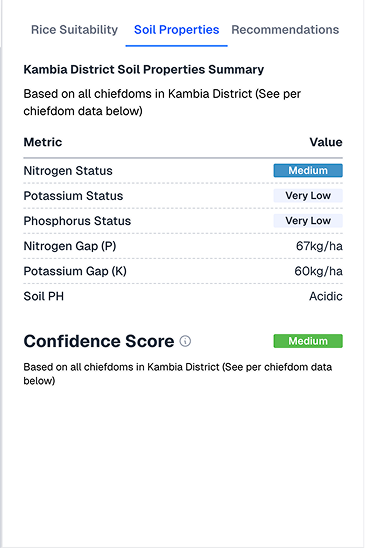
Soil Properties Overview
A concise snapshot of key soil characteristics—nutrient status, pH, and gaps—translated into interpretable indicators for decision-making..
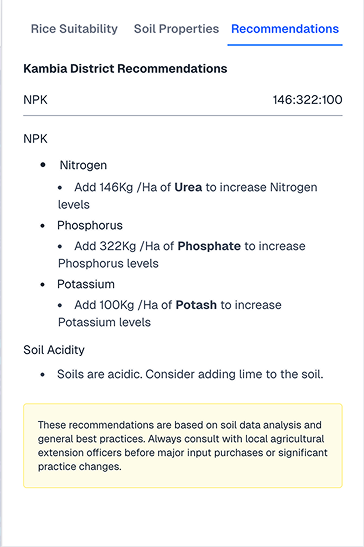
Input Recommendations
Actionable, location-specific guidance on fertiliser and soil management practices, derived from soil data and agronomic best practices..
Outcomes
NATIONAL SOIL & RICE SUITABILITY COVERAGE
The PoC produced AI-driven soil, fertiliser, and rice suitability maps covering all districts and chiefdoms in Sierra Leone, delivering the first unified national view of soil health and crop potential to support Feed Salone planning and investment prioritisation.
SCALABLE TO NATIONAL ROLLOUT IN ~7 MONTHS
The PoC demonstrated a clear pathway from pilot to production, with a defined implementation roadmap enabling national rollout within ~7 months, including MVP development, piloting, and final feature integration .
30+ GOVERNMENT & AGRICULTURE STAKEHOLDERS ENGAGED
The PoC was co-designed through a 2-day in-country workshop with 30+ stakeholders, including senior MAFS directors and technical staff, ensuring the solution directly addressed priority pain points such as blanket fertiliser application, fragmented data, and investor information gaps.
INVESTMENT-READY OUTPUTS GENERATED
The platform enables the generation of standardised, exportable briefs and reports for planning, partners, and investors, reducing reliance on fragmented datasets and ad-hoc materials and strengthening the Ministry’s ability to present credible, evidence-based investment cases aligned with Feed Salone